Bruce Schneier | |||||||||||
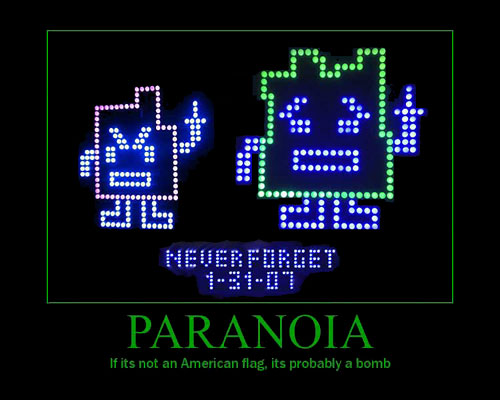
Schneier on SecurityA blog covering security and security technology. « February 2007 | Main | April 2007 » March 2007 Archives2007 EFF Pioneer AwardLast Tuesday I accepted my EFF Pioneer Award. Here's an audio of my speech, and here's a blog report from the event. I am very pleased to receive the award, and am simply stunned by this quote from Cory Doctorow: Technology could never achieve what the fundamental values of a democratic society can attain. We can change the world with the power of ideas. I defy you to read Bruce’s incredible essays and not have it change the way you think about the world. EDITED (4/6): Here's a video. Posted on March 31, 2007 at 10:19 AM • 13 Comments Friday Squid Blogging: Find Out Your Squid QuotientPosted on March 30, 2007 at 4:32 PM • 20 Comments Friday Squid Blogging: Strange Squid PhotoAnyone have any ideas? Posted on March 30, 2007 at 3:11 PM • 14 Comments I'm on More ListseWeek named me #40 in the "Top 100 Most Influential People in IT." IT.com named me as one of the "59 Top Influencers in IT Security." Posted on March 30, 2007 at 12:32 PM • 18 Comments Crazy Eddie Financial FraudThis is an old article -- from 2000 -- but the sidebar (at the end) describing how the electronics store Crazy Eddie committed massive financial fraud is fascinating. There are numerous ways to classify financial statement frauds. Our research divided them into five principal, but related, types. One of the most outrageous aspects of the Crazy Eddie's fraud is that he used all five methods. This is how he did it. Posted on March 30, 2007 at 6:33 AM • 20 Comments Mennonites and Photo IDsMennonites are considering moving to a different state because they don't want their photo taken for their drivers licenses. Many (all?) states had religious exemptions to the photo requirement, but now fewer are. The most interesting paragraph to me is the last one, though: And in Pennsylvania, Dr. Kraybill said, a law requiring photo identification to buy guns has prompted many Amish hunters to hire non-Amish neighbors to buy guns for them. Sounds like the photo-ID requirement is backfiring in this case. Posted on March 29, 2007 at 2:54 PM • 67 Comments Security Plus PrivacyThe Royal Academy of Engineering (in the UK) has just published a report: "Dilemmas of Privacy And Surveillance: Challenges of Technological Change" (press release here) where they argue that security and privacy are not in opposition, and that we can have both if we're sensible about it. Recommendations The whole thing is worth reading, as is this article from The Register. Posted on March 29, 2007 at 11:11 AM • 13 Comments Teenagers and Risk AssessmentIn an article on auto-asphyxiation, there's commentary on teens and risk: But the new debate also coincides with a reassessment of how teenagers think about risk. Conventional wisdom said adolescents often flirted with the edges of danger because they felt invulnerable. Of course, reality is always more complicated. We can invent fictional scenarios where it makes sense to play that game of Russian roulette. Imagine you have terminal cancer, and that million dollars would make a huge difference to your survivors. You might very well take the risk. Posted on March 29, 2007 at 6:48 AM • 47 Comments Al-Qaeda or Teens?From The Onion: "In this day and age, it's important for law-enforcement officials to consider global threats as well as local ones," Steinhorst said. "We could be dealing with an al-Qaeda sleeper cell attempting to collect information that they could use to plan a terrorist strike or some of those goth kids who knocked over that mailbox. Neither group has any respect for the law." Excellent parody. Posted on March 28, 2007 at 3:45 PM • 16 Comments Body Armor for ChildrenIn the UK, parents are buying body armor for children. One type of risk we consistently overestimate is risks involving our children. Posted on March 28, 2007 at 1:18 PM • 49 Comments Website of U.S. "Right to Privacy" Law CasesPosted on March 28, 2007 at 6:30 AM • 13 Comments How to Recover from Identity TheftA 24-point checklist: U.S. specific. Posted on March 27, 2007 at 1:07 PM • 17 Comments Security Measures in New £20 NotePosted on March 27, 2007 at 7:33 AM • 53 Comments Singapore's Vast Data Mining ProgramDetails are here. What's troubling to me is that even though Congress pulled funding for the program, it was developed elsewhere and now may be sold back to the U.S. Posted on March 26, 2007 at 3:44 PM • 21 Comments The U.S. Terrorist DatabaseInteresting article about the terrorist database: Terrorist Identities Datamart Environment (TIDE). It's huge: Ballooning from fewer than 100,000 files in 2003 to about 435,000, the growing database threatens to overwhelm the people who manage it. "The single biggest worry that I have is long-term quality control," said Russ Travers, in charge of TIDE at the National Counterterrorism Center in McLean. "Where am I going to be, where is my successor going to be, five years down the road?" Mostly the article tells you things you already know: the list is riddled with errors, and there's no defined process for getting on or off the list. But the most surreal quote is at the end, from Rick Kopel, the center's acting director: The center came in for ridicule last year when CBS's "60 Minutes" noted that 14 of the 19 Sept. 11 hijackers were listed -- five years after their deaths. Kopel defended the listings, saying that "we know for a fact that these people will use names that they believe we are not going to list because they're out of circulation -- either because they're dead or incarcerated. . . . It's not willy-nilly. Every name on the list, there's a reason that it's on there." Get that? There's someone who deliberately puts wrong names on the list because they think the terrorists might use aliases, and they want to catch them. Given that reasoning, wouldn't you want to put the entire phone book on the list? Posted on March 26, 2007 at 2:05 PM • 35 Comments 10,000 Fake British Passports in One YearThis is the kind of thing that demonstrates why attempts to make passports harder to forge are not the right way to spend security dollars. These aren't fake passports; they're real ones mis-issued. They have RFID chips and any other anti-counterfeiting measure the British government includes. The weak link in identity documents is the issuance procedures, not the documents themselves. Posted on March 26, 2007 at 6:46 AM • 36 Comments Friday Squid Blogging: Readying the 1000-lb Squid for ScienceInteresting challenges: "It's got to be thawed out slowly. You can't put hot water on it, you've just got to thaw it out naturally," says Te Papa's mollsuca collections manager Bruce Marshall. In further news, it might be microwaved. It's actually a hard problem; how do you ensure that the defrosted parts don't rot while waiting for the rest of it to defrost. Posted on March 23, 2007 at 4:10 PM • 14 Comments My Trip to IndiaArticles were written about me in the Hindustan Times and the Economic Times. Posted on March 23, 2007 at 12:56 PM • 12 Comments Misplacing the Blame in Personal Identity TheftsReally good article: In a recent dissection of the connection between gaming and violence, the term "folk devil" was used to describe something that can be labeled dangerous in order to assign blame in a case where the causes are complex and unclear. The new paper suggests that hackers have become the folk devils of computer security, stating that "even though the campaign against hackers has successfully cast them as the primary culprits to blame for insecurity in cyberspace, it is not clear that constructing this target for blame has improved the security of personal digital records." Posted on March 23, 2007 at 10:29 AM • 18 Comments Dutch eVoting ScandalHis software is used with the Nedap voting machines currently used in 90 per cent of the electoral districts, and although it is not used in the actual vote count, it does tabulate the results on both a regional and national level. Posted on March 23, 2007 at 6:12 AM • 24 Comments American Express Patenting Tracking People via RFIDInteresting story. I don't know how serious AmEx is about this, but it certainly is a good illustration of the possibilities of the technology. Posted on March 22, 2007 at 3:31 PM • 26 Comments Diplomatic ImmunityInteresting article about diplomatic immunity as a "get out of jail free" card in Germany. Shopping for free involves no legal consequences for the roughly 6,000 diplomats in Berlin and their families. Protected by diplomatic immunity as guaranteed under international law, members of the diplomatic service have all sorts of options not available to others. They can ignore red lights without fear of being fined, race through a speed trap drunk, bully the maid or refuse to pay the workman's bills. Of course they're being counterfeited: It seems like everybody wants one of those nice red "get out of jail free" cards these days: Senior prosecutor Karlheinz Dalheimer warns that "counterfeit diplomatic passports have been a major problem recently." Posted on March 22, 2007 at 1:44 PM • 36 Comments Incompetence at the BorderTom Kyte, Oracle database expert, relays a surreal story of a border crossing into the U.S. from Canada: He clicks on it and it asks for a password. He looks surprised and says "it needs a password". I was like - that is OK, I have it, here you go... Now he is logged in. But -- my desktop looks a tad different from most -- there is no IE on the desktop, just the recycle bin and a folder called programs -- nothing else. Posted on March 22, 2007 at 10:39 AM • 62 Comments "Psychology of Security" ExcerptMy Wired.com column for today is an excerpt from my "Psychology of Security" essay. Posted on March 22, 2007 at 7:20 AM • 6 Comments The Ultimate Movie Plot Threat: Killer AsteroidsThere's not enough money to track them: NASA officials say the space agency is capable of finding nearly all the asteroids that might pose a devastating hit to Earth, but there isn't enough money to pay for the task so it won't get done. The hardest risks to evaluate are the ones with very low probability of occurring and a very high cost if they do. Large-scale terrorist attacks are like that; so are asteroid collisions. Posted on March 22, 2007 at 6:03 AM • 35 Comments CRS Report on PolygraphsInteresting report, especially pages 6-7 (the bit about false positives). Posted on March 21, 2007 at 4:56 PM • 21 Comments Google's New Privacy RulesIt's a good change, but I'm not sure it is enough. I'd really prefer it if Google deleted the information after a shorter time. Posted on March 21, 2007 at 1:51 PM • 20 Comments Stealing Data from Disk Drives in PhotocopiersThis is a threat I hadn't thought of before: Now, experts are warning that photocopiers could be a culprit as well. Posted on March 21, 2007 at 12:10 PM • 20 Comments Stealing and Reselling Phone MinutesInteresting new variation of phone fraud: For the telecoms, the profit is in using VoIP to deliver calls from one phone to another. That requires a "gateway" server to connect a carrier's phone network to the Net. Phreakers break into these gateways, steal "voice minutes" and sell them to other, usually smaller, telecoms. Many of these firms then sell printed phone cards or operate call centers. "It's a great racket," says Justin Newman, CEO of BinFone Telecom of Baltimore, which has been stung by phreakers. Posted on March 21, 2007 at 11:20 AM • 12 Comments Control Your Car from the InternetReally. Or, for more fun, hack into the system and control someone else's car from the Internet. Posted on March 20, 2007 at 2:00 PM • 17 Comments Citizen Counter-TerroristsThe greater Manchester police want everyone to help them find terrorists: In a new anti-terror drive, a tip-off hotline is being relaunched and an advertising campaign will urge people to report any suspicious behaviour. It asks: This reminds me of TIPS, the ill-conceived U.S. program to have meter readers and the like -- people who regularly enter people's homes -- report suspicious activity to the police. It's just dumb; people will report each other because their food smells wrong, or they talk in a funny language. The system will be swamped with false alarms, which police will have to waste their time following up on. This sort of state-sponsored snitchery is something you'd expect out of the former East Germany, or the Soviet Union -- not the U.K. For comparison's sake, here's a similar program that I actually liked. Posted on March 20, 2007 at 12:26 PM • 44 Comments Volvo's "Heartbeat Sensor"Here's a great example of security theater: The Personal Car Communicator (PCC) is your car key's smart connection with your Volvo S80 applying the latest in two-way radio technology. When in range, you'll always know the status of your car. Locked or unlocked. Alarm activated or not. If the alarm has been activated, the heartbeat sensor will also tell you if there is someone inside the car. The PCC also includes keyless entry and keyless drive. I'll wager that it will sell, though, because it taps directly into people's fears. Does anyone know how it works? Sound? Something else? Posted on March 20, 2007 at 10:46 AM • 60 Comments U.S. Patent Office Spreads FUD About Music DownloadsIt's simply amazing: The United States Patent and Trademark Office claims that file-sharing sites could be setting up children for copyright infringement lawsuits and compromising national security. What happened? Did someone in the entertainment industry bribe the PTO to write this? Report here. Posted on March 20, 2007 at 6:58 AM • 26 Comments Social Engineering Diamond TheftNice story: In what may be the biggest robbery committed by one person, the conman burgled safety deposit boxes at an ABN Amro bank in Antwerp's diamond quarter, stealing gems weighing 120,000 carats. Posing as a successful businessman, the thief visited the bank frequently, befriending staff and gradually winning their confidence. He even brought them chocolates, according to one diamond industry official. People are the weakest security link, almost always. Posted on March 19, 2007 at 3:42 PM • 22 Comments Terrorist Bus DriversI thought we were done with this scary-story-but-nothing-to-worry-about stuff: The FBI has issued an "informational bulletin" to state and local officials saying to watch out for people tied to extremist groups trying to earn licenses to drive school buses. Wacky. EDITED TO ADD (3/20): Cory Doctorow has some more terrorist possibilities not to worry about. Posted on March 19, 2007 at 1:51 PM • 40 Comments Privacy Law and ConfidentialityInteresting article: Neil M. Richards & Daniel J. Solove, "Privacy's Other Path: Recovering the Law of Confidentiality," 96 Georgetown Law Journal, 2007. Abstract: Posted on March 19, 2007 at 6:39 AM • 8 Comments Friday Squid Blogging: Squid TypoFrom The Times. Posted on March 16, 2007 at 3:48 PM • 12 Comments For Sale: Fake Work Authorization CardYou can buy a fake U.S. Employment Authorization card (here's a real version) for $200. Notice how all the security features of the card are faked -- very well. Posted on March 16, 2007 at 1:07 PM • 30 Comments Real vs. Perceived RiskTime Magazine article (from last November) on why we get risk so wrong. Interesting stuff, and very similar to my essay on the psychology of security. Posted on March 16, 2007 at 6:00 AM • 11 Comments BT Interview on SecurityAs part of BT's Big Thinkers series, Esther Dyson interviewed me and two other people (Risto Siilasmaa, Chairman of F-Secure Corporation; and Michael Barrett, PayPal's CISO) on network security issues. It was interesting and fun. The other interviews in the series are here. Posted on March 15, 2007 at 3:03 PM • 6 Comments Insurance and Risk CartoonFunny cartoon. Posted on March 15, 2007 at 12:49 PM • 4 Comments Making Another 9/11 ImpossibleI'm tired of headlines like this: New autopilot "will make another 9/11 impossible" Why are people so narrowly focused? The goal isn't to protect against another 9/11. The goal is to protect against another horrific terrorist incident. Stop focusing on the tactics, people. Look at the broad threats. I've written about this particular countermeasure before. Posted on March 15, 2007 at 7:42 AM • 55 Comments Vista Activation Cracked by Brute ForceInteresting, assuming it's true. Posted on March 14, 2007 at 1:45 PM • 34 Comments Find Out if You're on the "No Fly List"I'm not. Are you? Soundex works, generally, by removing vowels from names and then assigning numerical values to the remaining consonants. Posted on March 14, 2007 at 7:51 AM • 60 Comments The Difficulty of Profiling TerroristsInteresting article: A recently completed Dutch study of 242 Islamic radicals convicted or accused of planning terrorist attacks in Europe from 2001 to 2006 found that most were men of Arab descent who had been born and raised in Europe and came from lower or middle-class backgrounds. They ranged in age from 16 to 59 at the time of their arrests; the average was 27. About one in four had a criminal record. Posted on March 13, 2007 at 5:42 PM • 43 Comments Airport Credentials Manipulated to Commit CrimeSome airport baggage handlers used their official credentials to bypass security and smuggle guns and marijuana onto an airplane. This kind of thing is inevitable. Whenever you have a system that requires trusted people -- that is, every security system -- there is the possibility that those trusted people will not behave in a trustworthy manner. But there are ways of minimizing this risk. Posted on March 13, 2007 at 3:30 PM • 23 Comments Cloning an RFID PassportNothing I haven't said before, only a demonstration of how insecure they are. Posted on March 13, 2007 at 10:53 AM • 23 Comments Digital Privacy ManualDigital Security and Privacy for Human Rights Defenders. Posted on March 13, 2007 at 6:09 AM • 36 Comments FBI Issued Illegal National Security Letters Under USA PATRIOT ActA new Justice Department report concludes that the FBI broke the law in its use of the Patriot Act to secretly obtain phone, business, and financial data about people in the U.S. The Justice Department's inspector general has prepared a scathing report criticizing how the F.B.I. uses a form of administrative subpoena to obtain thousands of telephone, business and financial records without prior judicial approval. From the Associated Press: The FBI's transgressions were spelled out in a damning 126-page audit by Justice Department Inspector General Glenn A. Fine. He found that agents sometimes demanded personal data on people without official authorization, and in other cases improperly obtained telephone records in non-emergency circumstances. Here's the report (mirrored here), and here's a BoingBoing post on the topic; also, this Wired article. And this by Daniel Solove. Posted on March 12, 2007 at 3:55 PM • 33 Comments Al-Qaeda Plotting to Bring Down the Internet in the UKThis sounds so implausible. If you find any follow-up stories, please post them in comments. Posted on March 12, 2007 at 11:35 AM • 66 Comments Interview with Sandia WhistleblowerInteresting interview with Shawn Carpenter, the Sandia National Labs whistleblower who just won a $4.3 million lawsuit for wrongful termination. What prompted you to conduct that independent investigation into the Sandia intrusion in the first place? As a network intrusion detection analyst, I regularly used similar "back-hacking" techniques in the past to recover stolen Sandia password files and retrieve evidence to assist in system and network compromise investigations. Posted on March 12, 2007 at 6:56 AM • 28 Comments Electronic Frontier Foundation Pioneer AwardsI'm a 2007 EFF Pioneer Award recipient, as are Yochai Benkler and Cory Doctorow. Wow. Posted on March 9, 2007 at 3:33 PM • 26 Comments PC World Thinks I'm ImportantSpecifically, that I'm the 31st most influential person on the Web. It's an interesting list, in any case. Posted on March 9, 2007 at 3:25 PM • 22 Comments Friday Squid Blogging: Squid WhisksPosted on March 9, 2007 at 3:13 PM • 7 Comments Changing Generational Notions of PrivacyInteresting article. And after all, there is another way to look at this shift. Younger people, one could point out, are the only ones for whom it seems to have sunk in that the idea of a truly private life is already an illusion. Every street in New York has a surveillance camera. Each time you swipe your debit card at Duane Reade or use your MetroCard, that transaction is tracked. Your employer owns your e-mails. The NSA owns your phone calls. Your life is being lived in public whether you choose to acknowledge it or not. Posted on March 9, 2007 at 7:28 AM • 21 Comments CopycatsIt's called "splash-and-grab," and it's a new way to rob convenience stores. Two guys walk into a store, and one comes up to the counter with a cup of hot coffee or cocoa. He pays for it, and when the clerk opens the cash drawer, he throws the coffee in the clerk's face. The other one grabs the cash drawer, and they both run. Crimes never change, but tactics do. This tactic is new; someone just invented it. But now that it's in the news, copycats are repeating the trick. There have been at least 19 such robberies in Delaware, Pennsylvania and New Jersey. (Some arrests have been made since then.) Here's another example: On Nov. 24, 1971, someone with the alias Dan Cooper invented a new way to hijack an aircraft. Claiming he had a bomb, he forced a plane to land and then exchanged the passengers and flight attendants for $200,000 and four parachutes. (I leave it as exercise for the reader to explain why asking for more than one parachute is critical to the plan's success.) Taking off again, he told the pilots to fly to 10,000 feet. He then lowered the plane's back stairs and parachuted away. He was never caught, and the FBI still doesn't know who he is or whether he survived. After this story hit the press, there was an epidemic of copycat attacks. In 31 hijackings the following year, half of the hijackers demanded parachutes. It got so bad that the FAA required Boeing to install a special latch -- the Cooper Vane -- on the back staircases of its 727s so they couldn't be lowered in the air. The internet is filled with copycats. Green-card lawyers invented spam; now everyone does it. Other people invented phishing, pharming, spear phishing. The virus, the worm, the Trojan: It's hard to believe that these ubiquitous internet attack tactics were, until comparatively recently, tactics that no one had thought of. Most attackers are copycats. They aren't clever enough to invent a new way to rob a convenience store, use the web to steal money, or hijack an airplane. They try the same attacks again and again, or read about a new attack in the newspaper and decide they can try it, too. In combating threats, it makes sense to focus on copycats when there is a population of people already willing to commit the crime, who will migrate to a new tactic once it has been demonstrated to be successful. In instances where there aren't many attacks or attackers, and they're smarter -- al-Qaida-style terrorism comes to mind -- focusing on copycats is less effective because the bad guys will respond by modifying their attacks accordingly. Compare that to suicide bombings in Israel, which are mostly copycat attacks. The authorities basically know what a suicide bombing looks like, and do a pretty good job defending against the particular tactics they tend to see again and again. It's still an arms race, but there is a lot of security gained by defending against copycats. But even so, it's important to understand which aspect of the crime will be adopted by copycats. Splash-and-grab crimes have nothing to do with convenience stores; copycats can target any store where hot coffee is easily available and there is only one clerk on duty. And the tactic doesn't necessarily need coffee; one copycat used bleach. The new idea is to throw something painful and damaging in a clerk's face, grab the valuables and run. Similarly, when a suicide bomber blows up a restaurant in Israel, the authorities don't automatically assume the copycats will attack other restaurants. They focus on the particulars of the bomb, the triggering mechanism and the way the bomber arrived at his target. Those are the tactics that copycats will repeat. The next target may be a theater or a hotel or any other crowded location. The lesson for counterterrorism in America: Stay flexible. We're not threatened by a bunch of copycats, so we're best off expending effort on security measures that will work regardless of the tactics or the targets: intelligence, investigation and emergency response. By focusing too much on specifics -- what the terrorists did last time -- we're wasting valuable resources that could be used to keep us safer. This essay originally appeared on Wired.com. Posted on March 8, 2007 at 3:23 PM • 41 Comments Sky Marshals in AustraliaTheir cost-effectiveness is being debated: They've cost the taxpayer $106 million so far, they travel in business class, and over the past four years Australia's armed air marshals have had to act only once — subduing a 68-year-old man who produced a small knife on a flight from Sydney to Cairns in 2003. I have not seen any similar cost analysis from the United States. Posted on March 8, 2007 at 7:37 AM • 54 Comments Understanding Apple's DRMVery interesting article about Apple's DRM system, which they call "FairPlay." Posted on March 7, 2007 at 7:57 AM • 28 Comments The Doghouse: SniffexIt's nothing more than a homeland security scam: a dowsing rod for explosives. That, and a pump-and-dump stock scam. The site is down, but Google has a cache. EDITED TO ADD (3/11): Much more here. EDITED TO ADD (3/19): More info here. Posted on March 6, 2007 at 7:51 AM • 78 Comments Xbox 360 Privilege Escalation AttackPosted on March 5, 2007 at 12:43 PM • 12 Comments Powder-Sized RFID TagsPosted on March 5, 2007 at 6:39 AM • 33 Comments Friday Squid Blogging: Ika Yaki OiishiPosted on March 2, 2007 at 4:17 PM • 11 Comments Friday Squid Blogging: Life of a SquidPZ Myers reguarly blogs about squid; here's an interesting post. It seems that squid grow up fast and die young, and are replacing some slow-maturing fish in the oceans. Posted on March 2, 2007 at 2:42 PM • 2 Comments "Paranoia" PosterPosted on March 2, 2007 at 11:21 AM • 23 Comments Canadian Anti-Terrorism Law NewsThe court said the men, who are accused of having ties to al-Qaeda, have the right to see and respond to evidence against them. It pointed to a law in Britain that allows special advocates or lawyers to see sensitive intelligence material, but not share details with their clients. And that's not the only piece of good news from Canada. Two provisions from an anti-terrorism law passed at the end of 2001 were due to expire at the end of February. The House of Commons has voted against extending them: One of the anti-terrorism measures allows police to arrest suspects without a warrant and detain them for three days without charges, provided police believe a terrorist act may be committed. The other measure allows judges to compel witnesses to testify in secret about past associations or pending acts. The witnesses could go to jail if they don't comply. Another article here. Posted on March 2, 2007 at 6:54 AM • 11 Comments Faking Hardware Memory Access[Joanna] Rutkowksa will show how an attacker could prevent forensics investigators from getting a real image of the memory where the malware resides. "Even if they somehow find out that the system is compromised, they will be unable to get the real image of memory containing the malware, and consequently, they will be unable to analyze it," says Rutkowska, senior security researcher for COSEINC. Posted on March 1, 2007 at 1:33 PM • 19 Comments Boston Police Blow Up Traffic CounterIs the Boston police trying to become a national laughing stock? It's not just the Mooninite blinkies. In 2004, the Boston police harrassed a protester by pretending he might be standing on a bomb. I'm beginning to think that something is seriously wrong with the police chain of command in Boston. Boston PD: Putting the "error" in "terror." Posted on March 1, 2007 at 6:27 AM • 78 Comments
Powered by Movable Type. Photo at top by Geoffrey Stone.
Schneier.com is a personal website. Opinions expressed are not necessarily those of BT. |
|