Entries Tagged "locks"

Page 7 of 12

Reproducing Keys from Photographs

Reproducing keys from distant and angled photographs:

Abstract:
The access control provided by a physical lock is based on the assumption that the information content of the corresponding key is private—that duplication should require either possession of the key or a priori knowledge of how it was cut. However, the ever-increasing capabilities and prevalence of digital imaging technologies present a fundamental challenge to this privacy assumption. Using modest imaging equipment and standard computer vision algorithms, we demonstrate the effectiveness of physical key teleduplication—extracting a key’s complete and precise bitting code at a distance via optical decoding and then cutting precise duplicates. We describe our prototype system, Sneakey, and evaluate its effectiveness, in both laboratory and real-world settings, using the most popular residential key types in the U.S.

Those of you who carry your keys on a ring dangling from a belt loop, take note.

Posted on October 1, 2009 at 2:09 PMView Comments

Hacking the Assa Solo Lock

Marc Weber Tobias again:

The new Assa Solo was recently introduced in Europe and we believe is the latest Cliq design. We were provided with samples and were able to show a reporter for Wired’s Threat Level how to completely circumvent the electronic credentials in less than thirty seconds, which she easily accomplished. This is the latest and most current example of a failure in security engineering at Assa.

[…]

In response to demonstrations and our disclosures about the bypass of Assa Cliq locks at Defcon 17, the product development manager of Assa in the U.S. told Wired Magazine that “From what I know of the CLIQ technology it can’t be done,” … “And until I’ve seen it done, it can’t be done.”

We believe this statement typifies precisely the problem at Assa Abloy companies: a failure of imagination. It prompted our research and subsequent discovery of multiple vulnerabilities in Cliq, Logic, and NexGen locks. It is this attitude that will continue to allow us to break locks that are represented as the ultimate in security by these companies, and which often provide a false sense of security to the locksmiths and customers that rely upon these products.

Me on locks and lockpicking.

Posted on August 21, 2009 at 6:03 AMView Comments

Lockpicking and the Internet

Physical locks aren’t very good. They keep the honest out, but any burglar worth his salt can pick the common door lock pretty quickly.

It used to be that most people didn’t know this. Sure, we all watched television criminals and private detectives pick locks with an ease only found on television and thought it realistic, but somehow we still held onto the belief that our own locks kept us safe from intruders.

The Internet changed that.

First was the MIT Guide to Lockpicking, written by the late Bob (“Ted the Tool”) Baldwin. Then came Matt Blaze’s 2003 paper on breaking master key systems. After that, came a flood of lock picking information on the Net: opening a bicycle lock with a Bic pen, key bumping, and more. Many of these techniques were already known in both the criminal and locksmith communities. The locksmiths tried to suppress the knowledge, believing their guildlike secrecy was better than openness. But they’ve lost: Never has there been more public information about lock picking—or safecracking, for that matter.

Lock companies have responded with more complicated locks, and more complicated disinformation campaigns.

There seems to be a limit to how secure you can make a wholly mechanical lock, as well as a limit to how large and unwieldy a key the public will accept. As a result, there is increasing interest in other lock technologies.

As a security technologist, I worry that if we don’t fully understand these technologies and the new sorts of vulnerabilities they bring, we may be trading a flawed technology for an even worse one. Electronic locks are vulnerable to attack, often in new and surprising ways.

Start with keypads, more and more common on house doors. These have the benefit that you don’t have to carry a physical key around, but there’s the problem that you can’t give someone the key for a day and then take it away when that day is over. As such, the security decays over time—the longer the keypad is in use, the more people know how to get in. More complicated electronic keypads have a variety of options for dealing with this, but electronic keypads work only when the power is on, and battery-powered locks have their own failure modes. Plus, far too many people never bother to change the default entry code.

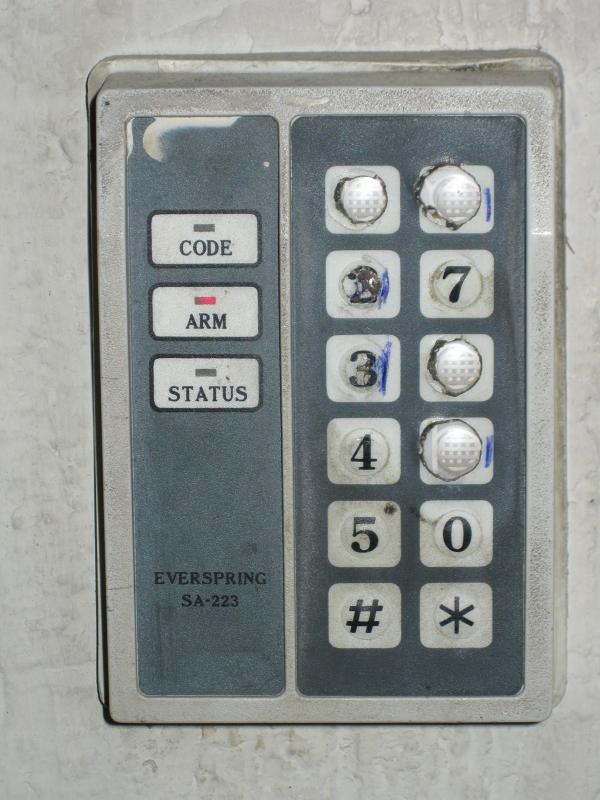
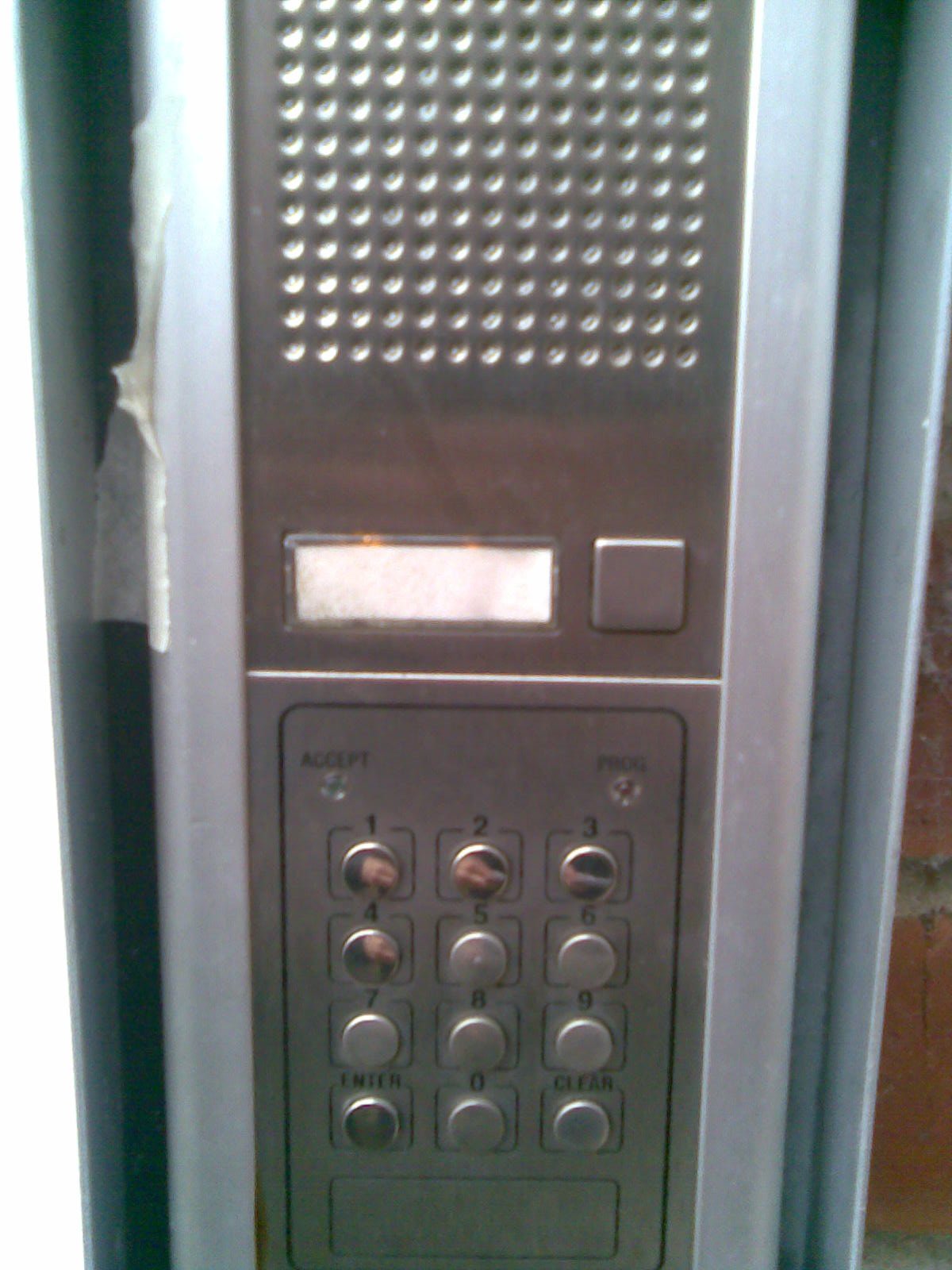
Keypads have other security failures, as well. I regularly see keypads where four of the 10 buttons are more worn than the other six. They’re worn from use, of course, and instead of 10,000 possible entry codes, I now have to try only 24.

Fingerprint readers are another technology, but there are many known security problems with those. And there are operational problems, too: They’re hard to use in the cold or with sweaty hands; and leaving a key with a neighbor to let the plumber in starts having a spy-versus-spy feel.

Some companies are going even further. Earlier this year, Schlage launched a series of locks that can be opened either by a key, a four-digit code, or the Internet. That’s right: The lock is online. You can send the lock SMS messages or talk to it via a Website, and the lock can send you messages when someone opens it—or even when someone tries to open it and fails.

Sounds nifty, but putting a lock on the Internet opens up a whole new set of problems, none of which we fully understand. Even worse: Security is only as strong as the weakest link. Schlage’s system combines the inherent “pickability” of a physical lock, the new vulnerabilities of electronic keypads, and the hacking risk of online. For most applications, that’s simply too much risk.

This essay previously appeared on DarkReading.com.

Posted on August 12, 2009 at 5:48 AMView Comments

A Sad Tale of Biometrics Gone Wrong

From The Daily WTF:

Johnny was what you might call a “gym rat.” In incredible shape from almost-daily gym visits, a tight Lycra tank top, iPod strapped to his sizable bicep, underneath which was a large black tribal tattoo. He scanned his finger on his way out, but the turnstile wouldn’t budge.

“Uh, just a second,” the receptionist furiously typed and clicked, while Johnny removed one of his earbuds out and stared. “I’ll just have to manually override it…” but it was useless. There was no manual override option. Somehow, it was never considered that the scanner would malfunction. After several seconds of searching and having Johnny try to scan his finger again, the receptionist instructed him just to jump over the turnstile.

It was later discovered that the system required a “sign in” and a “sign out,” and if a member was recognized as someone else when attempting to sign out, the system rejected the input, and the turnstile remained locked in position. This was not good.

The scene repeated itself several times that day. Worse, the fingerprint scanner at the exit was getting kind of disgusting. Dozens of sweaty fingerprints required the scanner to be cleaned hourly, and even after it was freshly cleaned, it sometimes still couldn’t read fingerprints right. The latticed patterns on the barbell grips would leave indented patterns temporarily on the members’ fingers, there could be small cuts or folds on fingertips just from carrying weights or scrapes on the concrete coming out of the pool, fingers were wrinkly after a long swim, or sometimes the system just misidentified the person for no apparent reason.

Me on biometrics.

Posted on April 30, 2009 at 6:19 AMView Comments

Google Maps Spam

There are zillions of locksmiths in New York City.

Not really; this is the latest attempt by phony locksmiths to steer business to themselves:

This is one of the scary parts they have a near monopoly on the cell phone 411 system. They have filled the data bases with so many phony address listings in most major citys that when you call 411 on your cell phone ( which most people do now) you will get the same counterfiet locksmiths over and over again. you could ask for 10 listings and they will all be one of these scammers or another with some local adress that is phony. they use thousands of different names also. It is always the same 55.00 service qouted for a lockout and after they unlock your stuff the price goes much higher. These companys are really not in the rural areas but the are in just about all major citys from coast to coast and from top to bottom. [sic]

More here:

Google wasn’t their first target. The “blackhats” in the industry have used whatever marketing vehicle was “au courant,” whether it was the phone books, 411 or now Google and Yahoo.

Here is a BBB alert from 2007, BBB Warns Consumers of Nationwide Locksmith Swindle and a recent ABC news article and video. The Associated Locksmiths of America provides a list of over 110 news reports over the past several years from across the nation detailing the abuses. As you can see, consumers have paid the price of these many scams with high prices, rip-off installs and even theft.

Posted on March 11, 2009 at 12:38 PM

1 5 6 7 8 9 12

Sidebar photo of Bruce Schneier by Joe MacInnis.