Entries Tagged "biometrics"

Page 11 of 17

Second SHB Workshop Liveblogging (4)

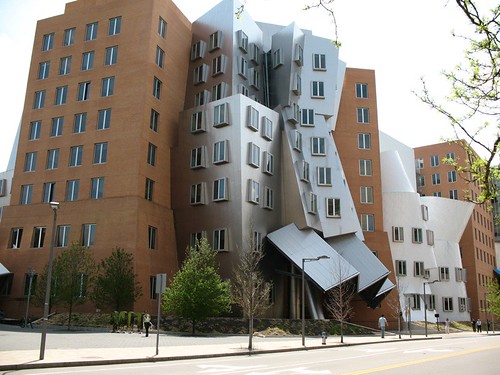
Session three was titled “Usability.” (For the record, the Stata Center is one ugly building.)
Andrew Patrick, NRC Canada until he was laid off four days ago (suggested reading: Fingerprint Concerns: Performance, Usability, and Acceptance of Fingerprint Biometric Systems), talked about biometric systems and human behavior. Biometrics are used everywhere: for gym membership, at Disneyworld, at international borders. The government of Canada is evaluating using iris recognition at a distance for events like the 2010 Olympics. There are two different usability issues: with respect to the end user, and with respect to the authenticator. People’s acceptance of biometrics is very much dependent on the context. And of course, biometrics are not secret. Patrick suggested that to defend ourselves against this proliferation of using biometrics for authentication, the individual should publish them. The rationale is that we’re publishing them anyway, so we might as well do it knowingly.

Luke Church, Cambridge University (suggested reading: SHB Position Paper; Usability and the Common Criteria), talked about what he called “user-centered design.” There’s a economy of usability: “in order to make some things easier, we have to make some things harder”—so it makes sense to make the commonly done things easier at the expense of the rarely done things. This has a lot of parallels with security. The result is “appliancisation” (with a prize for anyone who come up with a better name): the culmination of security behaviors and what the system can do embedded in a series of user choices. Basically, giving users meaningful control over their security. Luke discussed several benefits and problems with the approach.

Diana Smetters, Palo Alto Research Center (suggested reading: Breaking out of the browser to defend against phishing attacks; Building secure mashups; Ad-hoc guesting: when exceptions are the rule), started with these premises: you can teach users, but you can’t teach them very much, so you’d better carefully design systems so that you 1) minimize what they have to learn, 2) make it easier for them to learn it, and 3) maximize the benefit from what they learn. Too often, security is at odds with getting the job done. “As long as configuration errors (false alarms) are common, any technology that requires users to observe security indicators and react to them will fail as attacks can simply masquerade as errors, and users will rationally ignore them.” She recommends meeting the user halfway by building new security models that actually fit the users’ needs. (For example: Phishing is a mismatch problem, between what’s in the user’s head and where the URL is actually going. SSL doesn’t work, but how should websites authenticate themselves to users? Her solution is protected links: a set of secure bookmarks in protected browsers. She went on to describe a prototype and tests run with user subjects.

Jon Callas, PGP Corporation (suggested reading: Improving Message Security with a Self-Assembling PKI), used the metaphor of the “security cliff”: you have to keep climbing until you get to the top and that’s hard, so it’s easier to just stay at the bottom. He wants more of a “security ramp,” so people can reasonably stop somewhere in the middle. His idea is to have a few policies—e-mail encryption, rules about USB drives—and enforce them. This works well in organizations, where IT has dictatorial control over user configuration. If we can’t teach users much, we need to enforce policies on users.

Rob Reeder, Microsoft (suggested reading: Expanding Grids for Visualizing and Authoring Computer Security Policies), presented a possible solution to the secret questions problem: social authentication. The idea is to use people you know (trustees) to authenticate who you are, and have them attest to the fact that you lost your password. He went on to describe how the protocol works, as well as several potential attacks against the protocol and defenses, and experiments that tested the protocol. In the question session he talked about people designating themselves as trustees, and how that isn’t really a problem.

Lorrie Cranor, Carnegie Mellon University (suggested reading: A Framework for Reasoning about the Human in the Loop; Timing Is Everything? The Effects of Timing and Placement of Online Privacy Indicators; School of Phish: A Real-Word Evaluation of Anti-Phishing Training; You’ve Been Warned: An Empirical Study of the Effectiveness of Web Browser Phishing Warnings), talked about security warnings. The best option is to fix the hazard; the second best is to guard against it—but far too often we just warn people about it. But since hazards are generally not very hazardous, most people just ignore them. “Often, software asks the user and provides little or no information to help user make this decision.” Better is to use some sort of automated analysis to assist the user in responding to warnings. For websites, for example, the system should block sites with a high probability of danger, not bother users if there is a low probably of danger, and help the user make the decision in the grey area. She went on to describe a prototype and user studies done with the prototype; her paper will be presented at USENIX Security in August.

Much of the discussion centered on how bad the problem really is, and how much security is good enough. The group also talked about economic incentives companies have to either fix or ignore security problems, and whether market approaches (or, as Jean Camp called it, “the happy Libertarian market pony”) are sufficient. Some companies have incentives to convince users to do the wrong thing, or at the very least to do nothing. For example, social networking sites are more valuable if people share their information widely.

Further discussion was about whitelisting, and whether it worked or not. There’s the problem of the bad guys getting on the whitelist, and the risk that organizations like the RIAA will use the whitelist to enforce copyright, or that large banks will use the whitelist as a tool to block smaller start-up banks. Another problem is that the user might not understand what a whitelist signifies.

Dave Clark from the audience: “It’s not hard to put a seat belt on, and if you need a lesson, take a plane.”

Kind of a one-note session. We definitely need to invite more psych people.

Adam Shostack’s liveblogging is here. Ross Anderson’s liveblogging is in his blog post’s comments. Matt Blaze’s audio is here.

Posted on June 11, 2009 at 2:56 PMView Comments

No Smiling in Driver's License Photographs

In other biometric news, four states have banned smiling in driver’s license photographs.

The serious poses are urged by DMVs that have installed high-tech software that compares a new license photo with others that have already been shot. When a new photo seems to match an existing one, the software sends alarms that someone may be trying to assume another driver’s identity.

But there’s a wrinkle in the technology: a person’s grin. Face-recognition software can fail to match two photos of the same person if facial expressions differ in each photo, says Carnegie Mellon University robotics professor Takeo Kanade.

Posted on May 29, 2009 at 11:19 AMView Comments

News from the Fingerprint Biometrics World

Wacky:

A Singapore cancer patient was held for four hours by immigration officials in the United States when they could not detect his fingerprints—which had apparently disappeared because of a drug he was taking.

[…]

The drug, capecitabine, is commonly used to treat cancers in the head and neck, breast, stomach and colorectum.

One side-effect is chronic inflammation of the palms or soles of the feet and the skin can peel, bleed and develop ulcers or blisters—or what is known as hand-foot syndrome.

“This can give rise to eradication of fingerprints with time,” explained Tan, senior consultant in the medical oncology department at Singapore’s National Cancer Center.

Posted on May 29, 2009 at 6:37 AMView Comments

A Sad Tale of Biometrics Gone Wrong

From The Daily WTF:

Johnny was what you might call a “gym rat.” In incredible shape from almost-daily gym visits, a tight Lycra tank top, iPod strapped to his sizable bicep, underneath which was a large black tribal tattoo. He scanned his finger on his way out, but the turnstile wouldn’t budge.

“Uh, just a second,” the receptionist furiously typed and clicked, while Johnny removed one of his earbuds out and stared. “I’ll just have to manually override it…” but it was useless. There was no manual override option. Somehow, it was never considered that the scanner would malfunction. After several seconds of searching and having Johnny try to scan his finger again, the receptionist instructed him just to jump over the turnstile.

It was later discovered that the system required a “sign in” and a “sign out,” and if a member was recognized as someone else when attempting to sign out, the system rejected the input, and the turnstile remained locked in position. This was not good.

The scene repeated itself several times that day. Worse, the fingerprint scanner at the exit was getting kind of disgusting. Dozens of sweaty fingerprints required the scanner to be cleaned hourly, and even after it was freshly cleaned, it sometimes still couldn’t read fingerprints right. The latticed patterns on the barbell grips would leave indented patterns temporarily on the members’ fingers, there could be small cuts or folds on fingertips just from carrying weights or scrapes on the concrete coming out of the pool, fingers were wrinkly after a long swim, or sometimes the system just misidentified the person for no apparent reason.

Me on biometrics.

Posted on April 30, 2009 at 6:19 AMView Comments

Michael Froomkin on Identity Cards

University of Miami law professor Michael Froomkin writes about ID cards and society in “Identity Cards and Identity Romanticism.”

This book chapter for “Lessons from the Identity Trail: Anonymity, Privacy and Identity in a Networked Society” (New York: Oxford University Press, 2009)—a forthcoming comparative examination of approaches to the regulation of anonymity edited by Ian Kerr—discusses the sources of hostility to National ID Cards in common law countries. It traces that hostility in the United States to a romantic vision of free movement and in England to an equally romantic vision of the ‘rights of Englishmen’.

Governments in the United Kingdom, United States, Australia, and other countries are responding to perceived security threats by introducing various forms of mandatory or nearly mandatory domestic civilian national identity documents. This chapter argues that these ID cards pose threats to privacy and freedom, especially in countries without strong data protection rules. The threats created by weak data protection in these new identification schemes differ significantly from previous threats, making the romantic vision a poor basis from which to critique (highly flawed) contemporary proposals.

One small excerpt:

…it is important to note that each ratchet up in an ID card regime—the introduction of a non-mandatory ID card scheme, improvements to authentication, the transition from an optional regime to a mandatory one, or the inclusion of multiple biometric identifiers—increases the need for attention to how the data collected at the time the card is created will be stored and accessed. Similarly, as ID cards become ubiquitous, a de facto necessity even when not required de jure, the card becomes the visible instantiation of a large, otherwise unseen, set of databases. If each use of the card also creates a data trail, the resulting profile becomes an ongoing temptation to both ordinary and predictive profiling.

Posted on March 4, 2009 at 7:25 AMView Comments

Three Security Anecdotes from the Insect World

Beet armyworm caterpillars react to the sound of a passing wasp by freezing in place, or even dropping off the plant. Unfortunately, armyworm intelligence isn’t good enough to tell the difference between enemy aircraft (the wasps that prey on them) and harmless commercial flights (bees); they react the same way to either. So by producing nectar for bees, plants not only get pollinated, but also gain some protection against being eaten by caterpillars.

The small hive beetle lives by entering beehives to steal combs and honey. They home in on the hives by detecting the bees’ own alarm pheromones. They also track in yeast that ferments the pollen and releases chemicals that spoof the alarm pheromones, attracting more beetles and more yeast. Eventually the bees abandon the hive, leaving their store of pollen and honey to the beetles and yeast.

Mountain alcon blue caterpillars get ants to feed them by spoofing a biometric: the sounds made by the queen ant.

Posted on March 3, 2009 at 1:20 PMView Comments

Biometrics

Biometrics may seem new, but they’re the oldest form of identification. Tigers recognize each other’s scent; penguins recognize calls. Humans recognize each other by sight from across the room, voices on the phone, signatures on contracts and photographs on driver’s licenses. Fingerprints have been used to identify people at crime scenes for more than 100 years.

What is new about biometrics is that computers are now doing the recognizing: thumbprints, retinal scans, voiceprints, and typing patterns. There’s a lot of technology involved here, in trying to both limit the number of false positives (someone else being mistakenly recognized as you) and false negatives (you being mistakenly not recognized). Generally, a system can choose to have less of one or the other; less of both is very hard.

Biometrics can vastly improve security, especially when paired with another form of authentication such as passwords. But it’s important to understand their limitations as well as their strengths. On the strength side, biometrics are hard to forge. It’s hard to affix a fake fingerprint to your finger or make your retina look like someone else’s. Some people can mimic voices, and make-up artists can change people’s faces, but these are specialized skills.

On the other hand, biometrics are easy to steal. You leave your fingerprints everywhere you touch, your iris scan everywhere you look. Regularly, hackers have copied the prints of officials from objects they’ve touched, and posted them on the Internet. We haven’t yet had an example of a large biometric database being hacked into, but the possibility is there. Biometrics are unique identifiers, but they’re not secrets.

And a stolen biometric can fool some systems. It can be as easy as cutting out a signature, pasting it onto a contract, and then faxing the page to someone. The person on the other end doesn’t know that the signature isn’t valid because he didn’t see it fixed onto the page. Remote logins by fingerprint fail in the same way. If there’s no way to verify the print came from an actual reader, not from a stored computer file, the system is much less secure.

A more secure system is to use a fingerprint to unlock your mobile phone or computer. Because there is a trusted path from the fingerprint reader to the stored fingerprint the system uses to compare, an attacker can’t inject a previously stored print as easily as he can cut and paste a signature. A photo on an ID card works the same way: the verifier can compare the face in front of him with the face on the card.

Fingerprints on ID cards are more problematic, because the attacker can try to fool the fingerprint reader. Researchers have made false fingers out of rubber or glycerin. Manufacturers have responded by building readers that also detect pores or a pulse.

The lesson is that biometrics work best if the system can verify that the biometric came from the person at the time of verification. The biometric identification system at the gates of the CIA headquarters works because there’s a guard with a large gun making sure no one is trying to fool the system.

Of course, not all systems need that level of security. At Counterpane, the security company I founded, we installed hand geometry readers at the access doors to the operations center. Hand geometry is a hard biometric to copy, and the system was closed and didn’t allow electronic forgeries. It worked very well.

One more problem with biometrics: they don’t fail well. Passwords can be changed, but if someone copies your thumbprint, you’re out of luck: you can’t update your thumb. Passwords can be backed up, but if you alter your thumbprint in an accident, you’re stuck. The failures don’t have to be this spectacular: a voiceprint reader might not recognize someone with a sore throat, or a fingerprint reader might fail outside in freezing weather. Biometric systems need to be analyzed in light of these possibilities.

Biometrics are easy, convenient, and when used properly, very secure; they’re just not a panacea. Understanding how they work and fail is critical to understanding when they improve security and when they don’t.

This essay originally appeared in the Guardian, and is an update of an essay I wrote in 1998.

Posted on January 8, 2009 at 12:53 PMView Comments

Voice Prints

Seems that it’s hard:

“There is no such thing as a voice print,” he said. “It’s a very very dangerous term. There is no single feature of a voice that is indelible that works like a fingerprint does.”

Many different factors influence how people speak at any particular time and place.

“If you’re tired or if you have a cold or if you’re speaking on a phone against traffic in the background you do all sorts of things to the voice, which make it phonetically very different from time to time,” said Foukles, who also works as a freelance consultant for a private forensic speech science laboratory.

“The features of speech and language are such that you can’t use them as a marker of identity to identify one person and exclude all other people under normal circumstances. People’s voices overlap.”

Posted on December 23, 2008 at 7:25 AMView Comments

Jim Harper Responds to My Comments on Fingerprinting Foreigners at the Border

Good comments:

Anyway, turning someone away from the border is a trivial security against terrorism because terrorists are fungible. Turning away a known terrorist merely inconveniences a terrorist group, which just has to recruit someone different. The 9/11 attacks were conducted for the most part by people who had no known record of terrorism and who arrived on visas granted to them by the State Department. Biometric border security would have prevented none of them entering.

(Another option is physical avoidance of the border—crossing into the United States from Canada or Mexico at an uncontrolled part of the border. I know of no instance of this occurring (successfully), but it could. And, most importantly, there’s no cost-effective way to prevent it.)

In summary, border biometrics have some benefit! They are at best a mild inconvenience to terrorists—an inconvenience that the 9/11 attacks mostly anticipated. But that’s not zero benefit! It’s just negligible benefit.

Posted on December 12, 2008 at 6:21 AMView Comments

1 9 10 11 12 13 17

Sidebar photo of Bruce Schneier by Joe MacInnis.