Entries Tagged "privacy"

Page 109 of 147

Spying on Computer Monitors Off Reflective Objects

Impressive research:

At Saarland University, researchers trained a $500 telescope on a teapot near a computer monitor 5 meters away. The images are tiny but amazingly clear, professor Michael Backes told IDG.

All it took was a $500 telescope trained on a reflective object in front of the monitor. For example, a teapot yielded readable images of 12 point Word documents from a distance of 5 meters (16 feet). From 10 meters, they were able to read 18 point fonts. With a $27,500 Dobson telescope, they could get the same quality of images at 30 meters.

Here’s the paper:

Abstract

We present a novel eavesdropping technique for spying at a distance on data that is displayed on an arbitrary computer screen, including the currently prevalent LCD monitors. Our technique exploits reflections of the screen’s optical emanations in various objects that one commonly finds in close proximity to the screen and uses those reflections to recover the original screen content. Such objects include eyeglasses, tea pots, spoons, plastic bottles, and even the eye of the user. We have demonstrated that this attack can be successfully mounted to spy on even small fonts using inexpensive, off-the-shelf equipment (less than 1500 dollars) from a distance of up to 10 meters. Relying on more expensive equipment allowed us to conduct this attack from over 30 meters away, demonstrating that similar attacks are feasible from the other side of the street or from a close-by building. We additionally establish theoretical limitations of the attack; these limitations may help to estimate the risk that this attack can be successfully mounted in a given environment.

Posted on May 20, 2008 at 10:44 AM • View Comments

Crossing Borders with Laptops and PDAs

Last month a US court ruled that border agents can search your laptop, or any other electronic device, when you’re entering the country. They can take your computer and download its entire contents, or keep it for several days. Customs and Border Patrol has not published any rules regarding this practice, and I and others have written a letter to Congress urging it to investigate and regulate this practice.

But the US is not alone. British customs agents search laptops for pornography. And there are reports on the internet of this sort of thing happening at other borders, too. You might not like it, but it’s a fact. So how do you protect yourself?

Encrypting your entire hard drive, something you should certainly do for security in case your computer is lost or stolen, won’t work here. The border agent is likely to start this whole process with a “please type in your password”. Of course you can refuse, but the agent can search you further, detain you longer, refuse you entry into the country and otherwise ruin your day.

You’re going to have to hide your data. Set a portion of your hard drive to be encrypted with a different key – even if you also encrypt your entire hard drive – and keep your sensitive data there. Lots of programs allow you to do this. I use PGP Disk . TrueCrypt is also good, and free.

While customs agents might poke around on your laptop, they’re unlikely to find the encrypted partition. (You can make the icon invisible, for some added protection.) And if they download the contents of your hard drive to examine later, you won’t care.

Be sure to choose a strong encryption password. Details are too complicated for a quick tip, but basically anything easy to remember is easy to guess. (My advice is here.) Unfortunately, this isn’t a perfect solution. Your computer might have left a copy of the password on the disk somewhere, and (as I also describe at the above link) smart forensic software will find it.

So your best defence is to clean up your laptop. A customs agent can’t read what you don’t have. You don’t need five years’ worth of email and client data. You don’t need your old love letters and those photos (you know the ones I’m talking about). Delete everything you don’t absolutely need. And use a secure file erasure program to do it. While you’re at it, delete your browser’s cookies, cache and browsing history. It’s nobody’s business what websites you’ve visited. And turn your computer off – don’t just put it to sleep – before you go through customs; that deletes other things. Think of all this as the last thing to do before you stow your electronic devices for landing. Some companies now give their employees forensically clean laptops for travel, and have them download any sensitive data over a virtual private network once they’ve entered the country. They send any work back the same way, and delete everything again before crossing the border to go home. This is a good idea if you can do it.

If you can’t, consider putting your sensitive data on a USB drive or even a camera memory card: even 16GB cards are reasonably priced these days. Encrypt it, of course, because it’s easy to lose something that small. Slip it in your pocket, and it’s likely to remain unnoticed even if the customs agent pokes through your laptop. If someone does discover it, you can try saying: “I don’t know what’s on there. My boss told me to give it to the head of the New York office.” If you’ve chosen a strong encryption password, you won’t care if he confiscates it.

Lastly, don’t forget your phone and PDA. Customs agents can search those too: emails, your phone book, your calendar. Unfortunately, there’s nothing you can do here except delete things.

I know this all sounds like work, and that it’s easier to just ignore everything here and hope you don’t get searched. Today, the odds are in your favour. But new forensic tools are making automatic searches easier and easier, and the recent US court ruling is likely to embolden other countries. It’s better to be safe than sorry.

This essay originally appeared in The Guardian.

Some other advice here.

EDITED TO ADD (5/18): Many people have pointed out to me that I advise people to lie to a government agent. That is, of course, illegal in the U.S. and probably most other countries—and probably not the best advice for me to be on record as giving. So be sure you clear your story first with both your boss and the New York office.

Posted on May 16, 2008 at 6:10 AM • View Comments

Cell Phone Spying

A handy guide:

A service called World Tracker lets you use data from cell phone towers and GPS systems to pinpoint anyone’s exact whereabouts, any time—as long as they’ve got their phone on them.

All you have to do is log on to the web site and enter the target phone number. The site sends a single text message to the phone that requires one response for confirmation. Once the response is sent, you are locked in to their location and can track them step-by-step. The response is only required the first time the phone is contacted, so you can imagine how easily it could be handled without the phone’s owner even knowing.

Once connected, the service shows you the exact location of the phone by the minute, conveniently pinpointed on a Google Map. So far, the service is only available in the UK, but the company has indicated plans to expand its service to other countries soon.

[…]

Dozens of programs are available that’ll turn any cell phone into a high-tech, long-range listening device. And the scariest part? They run virtually undetectable to the average eye.

Take, for example, Flexispy. The service promises to let you “catch cheating wives or cheating husbands” and even “bug meeting rooms.” Its tools use a phone’s microphone to let you hear essentially any conversations within earshot. Once the program is installed, all you have to do is dial a number to tap into the phone’s mic and hear everything going on. The phone won’t even ring, and its owner will have no idea you are virtually there at his side.

Posted on May 9, 2008 at 6:27 AM •

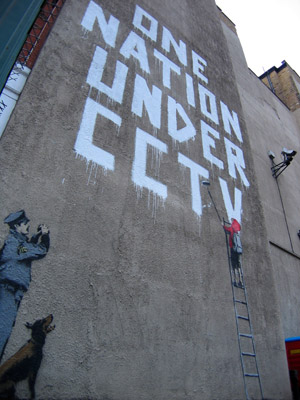
London's Cameras Don't Reduce Crime

News here and here:

Massive investment in CCTV cameras to prevent crime in the UK has failed to have a significant impact, despite billions of pounds spent on the new technology, a senior police officer piloting a new database has warned. Only 3% of street robberies in London were solved using CCTV images, despite the fact that Britain has more security cameras than any other country in Europe.

[…]

Use of CCTV images for court evidence has so far been very poor, according to Detective Chief Inspector Mick Neville, the officer in charge of the Metropolitan police unit. “CCTV was originally seen as a preventative measure,” Neville told the Security Document World Conference in London. “Billions of pounds has been spent on kit, but no thought has gone into how the police are going to use the images and how they will be used in court. It’s been an utter fiasco: only 3% of crimes were solved by CCTV. There’s no fear of CCTV. Why don’t people fear it? [They think] the cameras are not working.”

This is, of course is absolutely no surprise.

Posted on May 7, 2008 at 6:53 AM • View Comments

Chertoff Says Fingerprints Aren't Personal Data

Homeland Security Secretary Michael Chertoff says:

QUESTION: Some are raising that the privacy aspects of this thing, you know, sharing of that kind of data, very personal data, among four countries is quite a scary thing.

SECRETARY CHERTOFF: Well, first of all, a fingerprint is hardly personal data because you leave it on glasses and silverware and articles all over the world, they’re like footprints. They’re not particularly private.

Sounds like he’s confusing “secret” data with “personal” data. Lots of personal data isn’t particularly secret.

Posted on April 21, 2008 at 6:54 AM • View Comments

More RIPA Creep

I previously blogged about the UK’s Regulation of Investigatory Powers Act (RIPA), which was sold as a means to tackle terrorism, and other serious crimes, being used against animal rights protestors. The latest news from the UK is that a local council has used provisions of the act to put a couple and their children under surveillance, for “suspected fraudulent school place applications”:

Poole council said it used the legislation to watch a family at home and in their daily movements because it wanted to know if they lived in the catchment area for a school, which they wanted their three-year-old daughter to attend.

This kind of thing happens again and again. When campaigning for a law’s passage, the authorities invoke the most heinous of criminals—terrorists, kidnappers, drug dealers, child pornographers—but after the law is passed, they start using it in more mundane situations.

Another article. And this follow-up.

Posted on April 15, 2008 at 1:04 PM • View Comments

1967 Article on Data Privacy and Security

An eerily prescient article from The Atlantic in 1967 about the future of data privacy. It presents all of the basic arguments for strict controls on data collection of personal information, and it’s remarkably accurate in it’s predictions of the future development and importance of computers as well all of all of the ways the government would abuse them.

Well worth reading.

Posted on April 3, 2008 at 6:35 AM • View Comments

Sidebar photo of Bruce Schneier by Joe MacInnis.