Entries Tagged "physical security"

Page 12 of 25

Eighth Anniversary of 9/11

On September 30, 2001, I published a special issue of Crypto-Gram discussing the terrorist attacks. I wrote about the novelty of the attacks, airplane security, diagnosing intelligence failures, the potential of regulating cryptography—because it could be used by the terrorists—and protecting privacy and liberty. Much of what I wrote is still relevant today:

Appalled by the recent hijackings, many Americans have declared themselves willing to give up civil liberties in the name of security. They’ve declared it so loudly that this trade-off seems to be a fait accompli. Article after article talks about the balance between privacy and security, discussing whether various increases of security are worth the privacy and civil-liberty losses. Rarely do I see a discussion about whether this linkage is a valid one.

Security and privacy are not two sides of a teeter-totter. This association is simplistic and largely fallacious. It’s easy and fast, but less effective, to increase security by taking away liberty. However, the best ways to increase security are not at the expense of privacy and liberty.

It’s easy to refute the notion that all security comes at the expense of liberty. Arming pilots, reinforcing cockpit doors, and teaching flight attendants karate are all examples of security measures that have no effect on individual privacy or liberties. So are better authentication of airport maintenance workers, or dead-man switches that force planes to automatically land at the closest airport, or armed air marshals traveling on flights.

Liberty-depriving security measures are most often found when system designers failed to take security into account from the beginning. They’re Band-aids, and evidence of bad security planning. When security is designed into a system, it can work without forcing people to give up their freedoms.

[…]

There are copycat criminals and terrorists, who do what they’ve seen done before. To a large extent, this is what the hastily implemented security measures have tried to prevent. And there are the clever attackers, who invent new ways to attack people. This is what we saw on September 11. It’s expensive, but we can build security to protect against yesterday’s attacks. But we can’t guarantee protection against tomorrow’s attacks: the hacker attack that hasn’t been invented, or the terrorist attack yet to be conceived.

Demands for even more surveillance miss the point. The problem is not obtaining data, it’s deciding which data is worth analyzing and then interpreting it. Everyone already leaves a wide audit trail as we go through life, and law enforcement can already access those records with search warrants. The FBI quickly pieced together the terrorists’ identities and the last few months of their lives, once they knew where to look. If they had thrown up their hands and said that they couldn’t figure out who did it or how, they might have a case for needing more surveillance data. But they didn’t, and they don’t.

More data can even be counterproductive. The NSA and the CIA have been criticized for relying too much on signals intelligence, and not enough on human intelligence. The East German police collected data on four million East Germans, roughly a quarter of their population. Yet they did not foresee the peaceful overthrow of the Communist government because they invested heavily in data collection instead of data interpretation. We need more intelligence agents squatting on the ground in the Middle East arguing the Koran, not sitting in Washington arguing about wiretapping laws.

People are willing to give up liberties for vague promises of security because they think they have no choice. What they’re not being told is that they can have both. It would require people to say no to the FBI’s power grab. It would require us to discard the easy answers in favor of thoughtful answers. It would require structuring incentives to improve overall security rather than simply decreasing its costs. Designing security into systems from the beginning, instead of tacking it on at the end, would give us the security we need, while preserving the civil liberties we hold dear.

Some broad surveillance, in limited circumstances, might be warranted as a temporary measure. But we need to be careful that it remain temporary, and that we do not design surveillance into our electronic infrastructure. Thomas Jefferson once said: “Eternal vigilance is the price of liberty.” Historically, liberties have always been a casualty of war, but a temporary casualty. This war—a war without a clear enemy or end condition—has the potential to turn into a permanent state of society. We need to design our security accordingly.

Posted on September 11, 2009 at 6:26 AMView Comments

Hacking the Assa Solo Lock

Marc Weber Tobias again:

The new Assa Solo was recently introduced in Europe and we believe is the latest Cliq design. We were provided with samples and were able to show a reporter for Wired’s Threat Level how to completely circumvent the electronic credentials in less than thirty seconds, which she easily accomplished. This is the latest and most current example of a failure in security engineering at Assa.

[…]

In response to demonstrations and our disclosures about the bypass of Assa Cliq locks at Defcon 17, the product development manager of Assa in the U.S. told Wired Magazine that “From what I know of the CLIQ technology it can’t be done,” … “And until I’ve seen it done, it can’t be done.”

We believe this statement typifies precisely the problem at Assa Abloy companies: a failure of imagination. It prompted our research and subsequent discovery of multiple vulnerabilities in Cliq, Logic, and NexGen locks. It is this attitude that will continue to allow us to break locks that are represented as the ultimate in security by these companies, and which often provide a false sense of security to the locksmiths and customers that rely upon these products.

Me on locks and lockpicking.

Posted on August 21, 2009 at 6:03 AMView Comments

Lockpicking and the Internet

Physical locks aren’t very good. They keep the honest out, but any burglar worth his salt can pick the common door lock pretty quickly.

It used to be that most people didn’t know this. Sure, we all watched television criminals and private detectives pick locks with an ease only found on television and thought it realistic, but somehow we still held onto the belief that our own locks kept us safe from intruders.

The Internet changed that.

First was the MIT Guide to Lockpicking, written by the late Bob (“Ted the Tool”) Baldwin. Then came Matt Blaze’s 2003 paper on breaking master key systems. After that, came a flood of lock picking information on the Net: opening a bicycle lock with a Bic pen, key bumping, and more. Many of these techniques were already known in both the criminal and locksmith communities. The locksmiths tried to suppress the knowledge, believing their guildlike secrecy was better than openness. But they’ve lost: Never has there been more public information about lock picking—or safecracking, for that matter.

Lock companies have responded with more complicated locks, and more complicated disinformation campaigns.

There seems to be a limit to how secure you can make a wholly mechanical lock, as well as a limit to how large and unwieldy a key the public will accept. As a result, there is increasing interest in other lock technologies.

As a security technologist, I worry that if we don’t fully understand these technologies and the new sorts of vulnerabilities they bring, we may be trading a flawed technology for an even worse one. Electronic locks are vulnerable to attack, often in new and surprising ways.

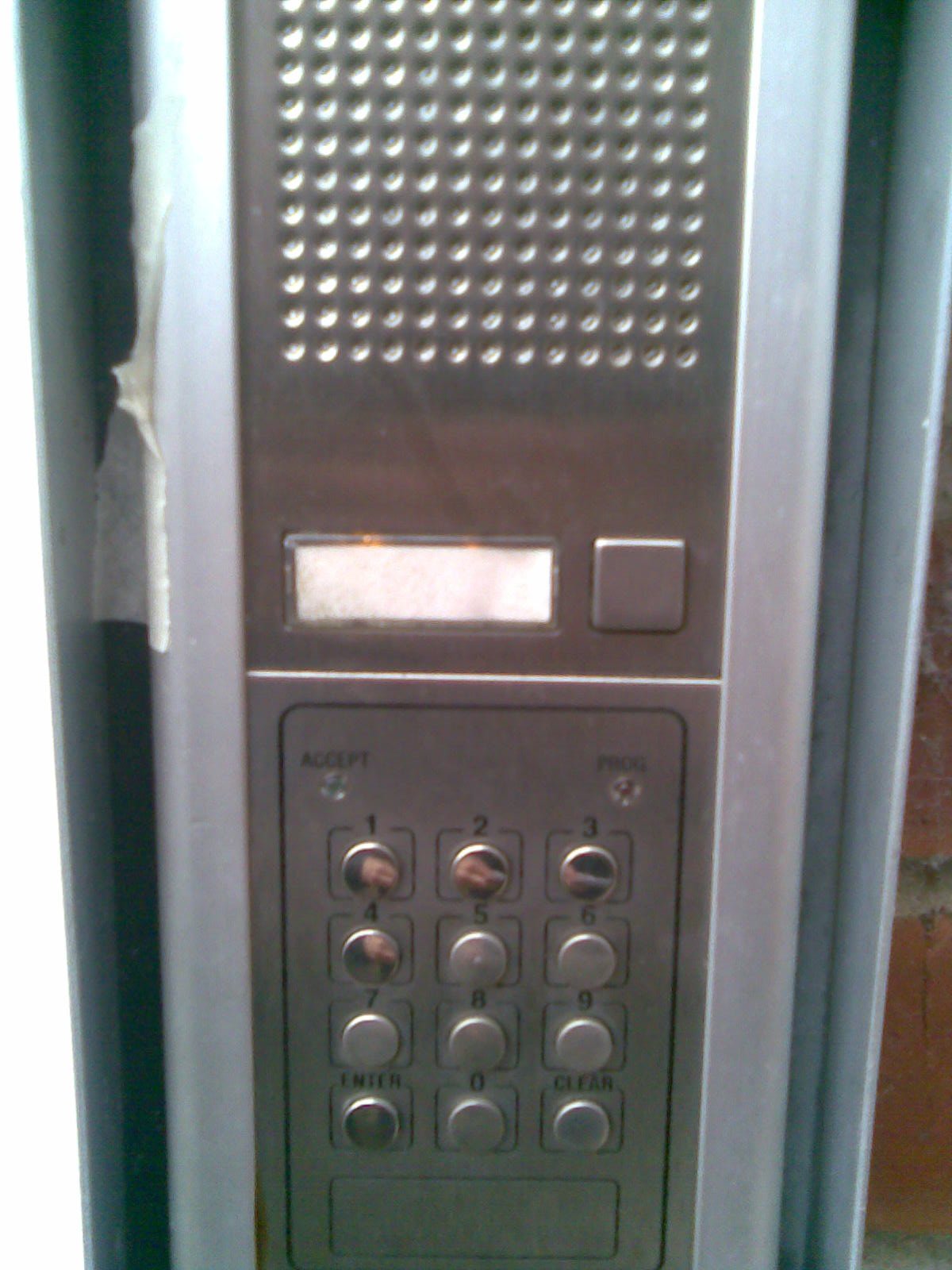
Start with keypads, more and more common on house doors. These have the benefit that you don’t have to carry a physical key around, but there’s the problem that you can’t give someone the key for a day and then take it away when that day is over. As such, the security decays over time—the longer the keypad is in use, the more people know how to get in. More complicated electronic keypads have a variety of options for dealing with this, but electronic keypads work only when the power is on, and battery-powered locks have their own failure modes. Plus, far too many people never bother to change the default entry code.

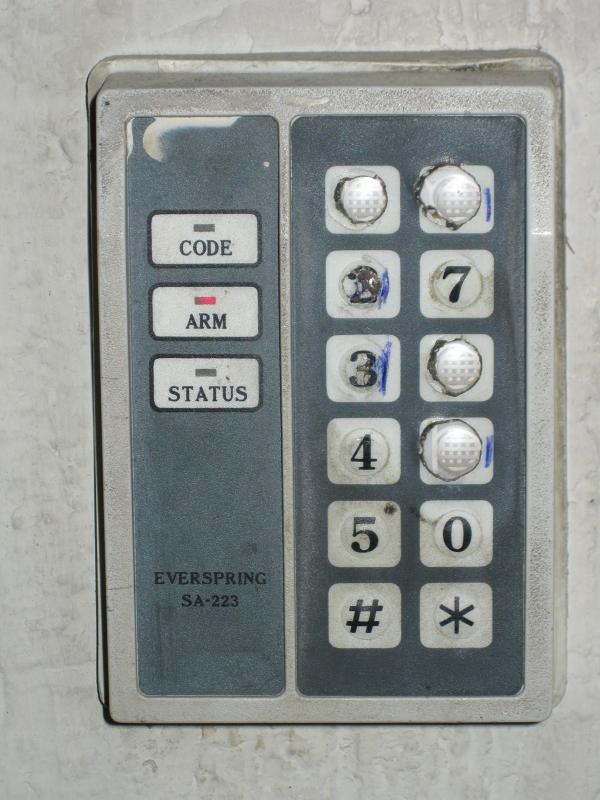
Keypads have other security failures, as well. I regularly see keypads where four of the 10 buttons are more worn than the other six. They’re worn from use, of course, and instead of 10,000 possible entry codes, I now have to try only 24.

Fingerprint readers are another technology, but there are many known security problems with those. And there are operational problems, too: They’re hard to use in the cold or with sweaty hands; and leaving a key with a neighbor to let the plumber in starts having a spy-versus-spy feel.

Some companies are going even further. Earlier this year, Schlage launched a series of locks that can be opened either by a key, a four-digit code, or the Internet. That’s right: The lock is online. You can send the lock SMS messages or talk to it via a Website, and the lock can send you messages when someone opens it—or even when someone tries to open it and fails.

Sounds nifty, but putting a lock on the Internet opens up a whole new set of problems, none of which we fully understand. Even worse: Security is only as strong as the weakest link. Schlage’s system combines the inherent “pickability” of a physical lock, the new vulnerabilities of electronic keypads, and the hacking risk of online. For most applications, that’s simply too much risk.

This essay previously appeared on DarkReading.com.

Posted on August 12, 2009 at 5:48 AMView Comments

Swiss Security Problem: Storing Gold

Seems like the Swiss may be running out of secure gold storage. If this is true, it’s a real security issue. You can’t just store the stuff behind normal locks. Building secure gold storage takes time and money.

I am reminded of a related problem the EU had during the transition to the euro: where to store all the bills and coins before the switchover date. There wasn’t enough vault space in banks, because the vast majority of currency is in circulation. It’s a similar problem, although the EU banks could solve theirs with lots of guards, because it was only a temporary problem.

Posted on July 28, 2009 at 7:13 AMView Comments

Pepper Spray–Equipped ATMs

South Africa takes its security seriously. Here’s an ATM that automatically squirts pepper spray into the face of “people tampering with the card slots.”

Sounds cool, but these kinds of things are all about false positives:

But the mechanism backfired in one incident last week when pepper spray was inadvertently inhaled by three technicians who required treatment from paramedics.

Patrick Wadula, spokesman for the Absa bank, which is piloting the scheme, told the Mail & Guardian Online: “During a routine maintenance check at an Absa ATM in Fish Hoek, the pepper spray device was accidentally activated.

“At the time there were no customers using the ATM. However, the spray spread into the shopping centre where the ATMs are situated.”

Posted on July 17, 2009 at 1:04 PM

Spanish Police Foil Remote-Controlled Zeppelin Jailbreak

Sometimes movie plots actually happen:

…three people have been arrested after police discovered their plan to free a drug trafficker from an island prison using a 13-foot airship carrying night goggles, climbing gear and camouflage paint.

[…]

The arrested men had setup an elaborate surveillance operation of the prison that involved a camouflaged tent, powerful binoculars, telephoto lenses, and motion detection sensors. But authorities caught wind of the plan when they intercepted the inflatable zeppelin as it arrived from the Italian town of Bergamo.

EDITED TO ADD (7/14): Another story, with more detail.

Posted on July 8, 2009 at 1:54 PMView Comments

Prairie Dogs Hack Baltimore Zoo

Fun story, with a lot of echoes of our own security problems:

It took just 10 minutes for a dozen prairie dogs to outwit the creators of the Maryland Zoo’s new $500,000 habitat.

Aircraft wire, poured concrete and slick plastic walls proved no match for the fast-footed rodents, the stars of a new exhibit that opens today.

As officials were promoting the return of the zoo’s 28 prairie dogs—their former digs had been out of sight in a closed section of the animal preserve for more than four years—some of the critters found ways to jump, climb and get over the walls of their prairie paradise, a centerpiece exhibit just inside the zoo’s main entrance.

[…]

But a few intrepid prairie dogs tried to find their way out, sending keepers scrambling to plug escape routes.

An hour later, just as zookeepers thought everything was under control, one rodent made it to the top of the wall. A dozen workers closed in. The prairie dog seemed to think better of it and jumped back into the enclosure.

“They find all the weak spots and exploit them,” said Karl Kranz, the zoo’s vice president for animal programs and chief operating officer.

[…]

Zoo staff members say the animals cannot burrow their way out because the former Kodiak bear environment is essentially a large concrete swimming bowl. The soil depth at Prairie Dog Town ranges from 6 feet to 8 feet.

“The dirt must be deeper than 36 inches in order for the prairie dogs to make their burrows under the frost line,” Kranz said. “We took soil samples from the old exhibit so the soils could be matched exactly to what they were used to having.”

After foiling the escape attempt, zoo workers adjusted wire fencing and installed more slippery plastic on the walls.

Posted on June 16, 2009 at 7:24 AMView Comments

1 10 11 12 13 14 25

Sidebar photo of Bruce Schneier by Joe MacInnis.